
Singleton design pattern
Published , updated
The singleton design pattern enables easy access to a single instance of a class.
Benefits
- Makes it very easy to get a single instance of an object globally
Drawbacks
- They are effectively just globals, this is not object-oriented design
- Can cause concurrency issues if not the singleton is not thread-safe
- Can make code hard to follow
- Makes unit testing more difficult
From the looks of the benefits and drawbacks you would wonder why you would use a singleton at all, a lot of people even consider it an anti-pattern. My answer to that question is that you should only use this pattern very sparingly and preferably not at all in large projects. You can however save yourself quite a bit of time using them in small projects.
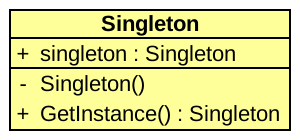
UML diagram
Note the private constructor.
Code examples
Traditional singleton
public class Singleton
{
    private static Singleton _instance = new Singleton();

    private Singleton() { }

    public static Singleton Instance
    {
        get { return _instance; }
    }
}
public class Singleton
{
private static Singleton instance = new Singleton();
private Singleton() { }
public static Singleton getInstance()
{
return instance;
}
}Singleton with lazy loading
public class LazyLoadingSingleton
{
    private static LazyLoadingSingleton _instance;

    private LazyLoadingSingleton() { }

    public static LazyLoadingSingleton Instance
    {
        get
        {
            if (_instance == null)
                _instance = new LazyLoadingSingleton();

            return _instance;
        }
    }
}
public class LazyLoadingSingleton
{
private static LazyLoadingSingleton instance;
private LazyLoadingSingleton() { }
public static LazyLoadingSingleton getInstance()
{
if (instance == null)
instance = new LazyLoadingSingleton();
return instance;
}
}var SingletonExample = function () {
if (SingletonExample.prototype.instance) {
return SingletonExample.prototype.instance;
}
SingletonExample.prototype.instance = this;
};Usage examples
Some common uses of the Singleton design pattern are:
- Caches
- Handling user preferences
- Factory or builder classes


